What Is Educational Psychology?
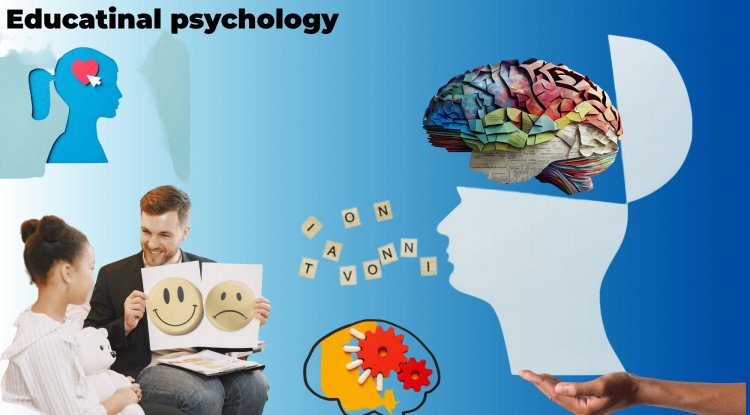
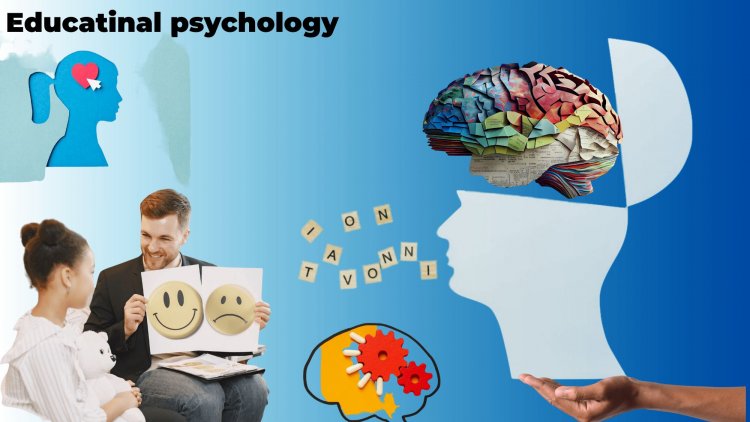
Instructive brain research is the ponder of how people learn and hold information, basically in instructive settings like classrooms. This incorporates passionate, social, and cognitive learning forms
What Is Educational Psychology?
Instructive brain research is the consideration of means of individual learning, counting instructing strategies, instructive forms, and personal contrasts in learning. Explore cognitive, behavioral, enthusiastic, and social impacts on the learning preparation. Instructive analysts utilize this understanding by way of individual schooling to create instructive methodologies and offer assistance to understudies who succeed in school. This department of brain research centers on instruction forms amid childhood and puberty but also analyzes the social, passionate, and logical forms included in deep-rooted schooling. The field of instructive brain research incorporates numerous other areas, such as formative brain research, behavioral brain research, and logical brain research. Approaches in instructive brain research incorporate behavioral, formative, cognitive, constructivist, and test points of view. This article depicts the diverse viewpoints secured within the field of instructive brain research, the subjects examined by instructive clinicians, and career alternatives in this field.
Educational psychology perspective
As in other fields of study of the mind researchers in instructional psychology tend to take different actions when considering issues. This logical logical focus on specific factors that influence learning, such as learned behavior, cognition, and experience. informative psychologists concentrate on by means of how people learn and keep possession of information. These experts study various theories of instructional development that determine the teaching methods used in classrooms around the world. Educational psychologists work with teachers and school administrators to implement sound informative practices that benefit most students. These psychologists can also help with more difficult problems, such as students with learning disabilities or low academic achievement.
Most of an educational psychologist's work is with kindergarten through 12th-grade students, but some work with adults with schooling disabilities.
Theory of Instructional Psychology
The field of instructional study of the mind is based on several theories about by way people learn.
Behavioral
John Watson expanded the behavioral theory of the educational study of the mind in 1913. This theory states that people are born with empty minds and their actions are a result of their environment. Behavioral theories place less emphasis on the idea of innate or genetic knowledge and instead focus only on means individuals acquire knowledge through instruction and developmental-behavioral theories use reward and punishment systems to change behavior. A good example of this is giving students points for good behavior and rewarding the class when they accumulate enough points.
Development
Psychologist Jean Piaget was a popular proponent of developmental thesis in instructional psychology. Developmental theory emphasizes that people approach the schooling of skills and concepts along a clearly defined continuum of growth and maturation, and explains by way of nature and nurture work together to shape a person's experiences. This is a view to consider personality. development.
Educational psychologists can gain a deeper understanding of children's development by understanding by means of children's thinking as they transition from one life stage to another.
Cognitive
Cognitivism was developed in response to behavioral theories that suggest that students process information through the filter of what they already know. This theory focuses on memory and organization. Examples of logical awareness in the classroom include memorization, concept mapping, and the use of analogies and metaphors to aid memory.
Constructivist
This perspective focuses on by means of students continually developing and acquiring knowledge throughout the instruction process. This theory emphasizes solving problems using real-world scenarios and critical thinking skills. Clinician Lev Vygotsky was a pioneer of the constructivist hypothesis. His work on zones of proximal development, which divides tasks into three major categories based on ability level, is a fundamental principle of the cognitive theory of instructional psychology.
Experimental
instructional psychology theory emphasizes by means of a person's life experiences influence their understanding and processing of new information. Similar to constructivist and cognitive perspectives, this theory considers factors such as students' thoughts, feelings, and personal experiences more carefully than other theories.
Applied Educational Psychology
Psychologists working in the field of education study the social, emotional, and cognitive processes associated with schooling and apply their findings to improve the learning process. Some specialize in the instructional development of specific groups, such as children, adolescents, or adults, while others focus on specific areas. instruction challenges such as attention deficit hyperactivity disorder (ADHD) and dyslexia. Regardless of the community in which they teach, these professionals are interested in teaching methods, instructional processes, and diverse schooling outcomes. By how much does the time of day in which new information is presented affect by means of well people retain it? What does culture have to do with the way of preparing modern thoughts? Does age matter? by way of will it affect their ability to develop new skills, such as language? - Is face-to-face schooling different from distance schooling using technology? By way does the choice of media platform affect schooling? These are all questions that educational psychologists ask (and answer) in a variety of settings, including government research centers, schools, community organizations, and learning centers.
Educational psychology perspective
As in other fields of psychology, researchers in instructional psychology tend to take different views when considering issues. These views focus on specific factors that influence schooling, such as learned behavior, cognition, and experience.
Behavioral Perspective
This view suggests that all behavior is learned through conditioning. Psychologists who accept this perspective rely heavily on the principles of operant conditioning to explain how schooling occurs. For example, teachers can reward learning by providing students with tokens that can be exchanged for desirable items such as candy or toys. The behavioral perspective is based on the theory that students learn when they are rewarded for "good" behavior and punished for "bad" behavior. Although these approaches are useful in some cases, behavioral approaches have been criticized for not considering attitudes, emotions, and intrinsic motivation for schooling.
Evolutionary Perspective
This view focuses on how children acquire new skills and knowledge as they grow. Jean Piaget's stages of cognitive development are an example of an important developmental theory that studies how children develop intellectually.
By understanding how children think at different stages of development, educational psychologists can gain a deeper understanding of what children are capable of at each stage of development and help teachers understand by means of children's thinking at a particular age. It is useful for creating instructional methods and teaching materials targeted at different demographic groups.
Cognitive Perspective
Cognitive approaches have become more popular, primarily because they explain how factors such as memory, beliefs, emotions, and motivation contribute to the learning process. 4 This theory supports the idea that people learn as a result of their own motivation. This is not the result of extrinsic rewards.
Cognitive psychology aims to understand how people think, learn, remember, and process information.
Educational psychologists who work with a cognitive view are interested in understanding how children become motivated to learn, by means of remembering what they learn, and by means of solving problems, among other things. I have.
Constructivist Approach
This perspective focuses on how we actually construct knowledge about the world. Constructivism accounts for the social and cultural influences that influence how we learn. Those who adopt a constructivist approach believe that what a person already knows has the greatest influence on how they learn new information. This means that new knowledge can only be understood in addition to existing knowledge.
This perspective is strongly influenced by the work of psychologist Lev Vygotsky, who proposed ideas such as the zone of proximal development and educational scaffolding.
Experimental Perspective
This perspective emphasizes that a person's life experiences influence how they make sense of new information. This method is similar to constructivist and cognitive perspectives in that it takes into account students' experiences, thoughts, and feelings.
This method allows people to find personal meaning in what they learn, rather than feeling like the information doesn't apply to them.
What's Your Reaction?